Is your trusty steam cleaner sputtering, spraying unevenly, or refusing to emit steam altogether? A common culprit behind these frustrating issues is a clogged nozzle. When your steam cleaner’s nozzle becomes blocked, it can drastically diminish its cleaning power and efficiency, turning a quick task into a prolonged chore. But don’t despair! You can often resolve this problem quickly and effectively right at home, restoring your steam cleaner to its optimal performance. This comprehensive guide will walk you through understanding why clogs occur, the tools you’ll need, and a step-by-step process to get your steam cleaner back in action, ensuring your home stays sparkling clean.
Understanding Your Steam Cleaner and Why Nozzles Clog
A steam cleaner utilizes superheated water vapor to sanitize and deep-clean various surfaces without the need for harsh chemicals. It works by heating water to a high temperature, creating steam that exits through a nozzle under pressure. This high-temperature steam effectively loosens dirt, dissolves grease, and kills up to 99.9% of bacteria and germs. The nozzle is the critical point where this powerful steam is concentrated and directed onto the cleaning surface, making its proper function essential for effective cleaning.
However, over time, these precise nozzles can become blocked, hindering steam flow. The primary reason for this is often the mineral content in tap water. As water evaporates during the steaming process, minerals like calcium and magnesium are left behind. These deposits, commonly known as limescale, can accumulate and harden inside the nozzle and other internal components, gradually constricting or completely blocking the steam’s exit path.
Beyond mineral buildup, tiny particles of dirt, debris, or even residues from previous cleaning tasks can also find their way into the nozzle and contribute to a blockage. If the cleaner isn’t properly rinsed or stored, these microscopic elements can settle and solidify. An obstructed nozzle not only reduces steam output but can also lead to uneven spraying, reduced pressure, and ultimately, a less effective clean. Understanding these common culprits is the first step in effectively tackling and preventing future clogs.
Common Causes of Steam Cleaner Nozzle Clogs
Experiencing a decrease in your steam cleaner’s performance can often be traced back to one of a few common causes affecting the nozzle. Identifying the source of the clog will help you address it more effectively and prevent it from recurring.
Hard Water Mineral Buildup
|
Our Picks for the Best Steam Cleaner in 2026
As an Amazon Associate I earn from qualifying purchases.
|
||
| Num | Product | Action |
|---|---|---|
| 1 | Heavy-Duty Steam Cleaner - 1500W Multipurpose Handheld Floor Steamer with 22 Accessories 16ft Cord for Home, Car Detailing, Tile, Grout, Carpet, Wallpaper, Upholstery, Window, Deep Cleaning |

|
| 2 | Steam Cleaner, Powerful Multi-Purpose Portable Steam Cleaner, Removes Dirt and Grease, Suitable for Multiple Uses and Various Floor Surfaces, Includes 23-Piece Accessory Kit, 16.4-Foot Power Cord |
|
| 3 | McCulloch MC1385 Deluxe Canister Steam Cleaner, 2-Hour Runtime, Chemical-Free, 23 Accessories: Mop Head, Brushes & More - Built for Home, Tile, Carpet, Furniture, & Personal Car Detailing |
|
| 4 | LABIGO 10-in-1 Steam Mop with Detachable Handheld Steamer, 350ml Tank, 10s Heat-Up, 248°F Steam Cleaner, 3-Level Control and Swivel Head for Floors, Carpets, Tiles, BBQ grill Multi-Surface Clean White |
|
| 5 | Amazon Basics Multipurpose Steam Cleaner for Home with 22 Accessories, Chemical-Free Cleaning, 51oz tank, 1500W, White |
|
| 6 | Heavy Duty Steam Cleaner, 1500W High-Temperature Mop with 26 Accessories, 1.4L Portable Tank, Chemical-Free Cleaning for Floors, Tiles, Cars & More, Child Lock for Safety, Easy Operation |
|
| 7 | Wagner Spraytech C900054 905e AutoRight Multi-Purpose Steam Cleaner, 12 Accessories Included, Power Steamer for cleaning, Color May Vary |
|
| 8 | TVD Steam Cleaner, Steamer for Cleaning with 26 Accessories, Steam Cleaner for Home with 5M Extra-Long Power Cord for Home Floor Cleaning, Tile Detailing, Grout, Upholstery. |
|
| 9 | Steam Cleaner, Steam Cleaner For Home, Handheld Steamer For Cleaning With 21 Accessories, 248 °F High Temperature, Suitable for Grout, Floor. Sofas, Upholstery, White |
|
| 10 | Steam Cleaner, Portable Steamer for Cleaning with 16pcs Accessories, 6-Level Adjustable, 15s Heat-Up, Handheld Steam Cleaner for Home for Tile, Grease, Dirt, Grout, Car Detailing, Green |
|
The most frequent offender is mineral buildup, particularly from hard water. Tap water, especially in certain regions, contains dissolved minerals like calcium and magnesium. When this water is heated to produce steam, these minerals don’t evaporate; instead, they precipitate out and cling to the internal surfaces of your steam cleaner, including the heating element, internal hoses, and most notably, the tiny orifice of the nozzle. Over time, these hard, chalky deposits accumulate, narrowing the opening and eventually blocking the steam flow. This is a progressive issue that worsens with regular use of un-distilled water.
Dirt and Debris Accumulation
While steam cleaners are designed to sanitize, they can also pick up microscopic dirt, dust, and debris from the surfaces they clean. If these particles are drawn back into the system or settle in the nozzle after use, they can contribute to blockages. Even small fibers from cleaning cloths or residual grime from tough stains can become lodged, acting as nucleation sites for mineral deposits or forming a physical barrier.
Improper Storage and Maintenance
Neglecting proper maintenance and storage can also lead to nozzle clogs. Leaving water in the tank after use can allow mineral deposits to form and bacteria to grow, which can then be flushed into the nozzle upon the next use. Failing to periodically rinse the tank and attachments, or storing the steam cleaner in a dusty environment without protective covers, can introduce contaminants that eventually lead to blockages. Regular cleaning and careful storage are crucial for preventing these issues and maintaining consistent performance.
Essential Tools and Materials You’ll Need
Before you begin the process of unclogging your steam cleaner nozzle, gathering the right tools and materials will ensure a smooth and effective operation. Most items are likely already in your home, making this a truly DIY-friendly task.
- Distilled White Vinegar: This acidic solution is excellent for dissolving mineral deposits (limescale). It’s a natural and effective descaling agent.
- Small, Thin Wire or Paperclip: A straightened paperclip, a sewing needle, or a specialized nozzle cleaning tool (sometimes provided with your steam cleaner) is perfect for gently dislodging physical blockages within the nozzle’s tiny opening.
- Small Cleaning Brush (Optional): A toothbrush or a small bottle brush can be useful for scrubbing away external residue around the nozzle.
- Soft Cloths or Old Towels: These will be handy for wiping down components and protecting your work surface from drips.
- Protective Gloves: Recommended to protect your hands, especially when handling cleaning solutions like vinegar.
- Empty Bucket or Sink: For draining water and rinsing components.
- Flashlight (Optional): To help inspect the nozzle for blockages.
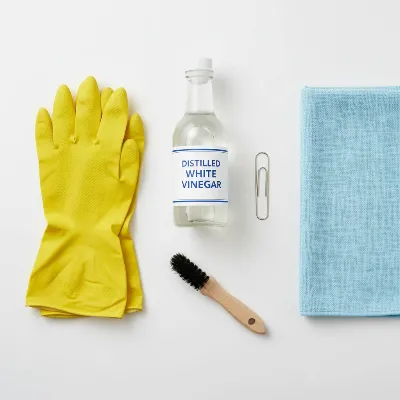 Tools for unclogging a steam cleaner nozzle, including vinegar, paperclip, brush, and gloves.
Having these items ready will prepare you to tackle the clog efficiently and safely. Remember, working in a well-lit area will make it easier to see the small nozzle opening and any obstructions.
Step-by-Step Guide to Unclogging Your Steam Cleaner Nozzle
When your steam cleaner’s performance drops due to a clogged nozzle, a systematic approach can quickly resolve the issue. Always prioritize safety before beginning any maintenance.
Step 1: Safety First – Unplug and Cool Down
Before touching any part of your steam cleaner, always ensure it is unplugged from the power outlet. This prevents accidental activation and electric shock. Next, allow the appliance to cool down completely. Steam cleaners operate at extremely high temperatures, and touching hot components can cause severe burns. Give it at least 30 minutes to an hour, or until it’s cool to the touch.
Step 2: Empty the Water Tank
Once the unit is cool, remove the water tank and empty any remaining water. If your steam cleaner has a separate boiler or reservoir, ensure that is also drained. This step helps prevent further mineral buildup and prepares the unit for cleaning.
Step 3: Mechanical Clearing of the Nozzle
Locate the nozzle, which is typically a small opening at the tip of the steam gun or attachment. Take your small, thin wire, paperclip, or specialized cleaning tool. Gently insert the tip of the wire into the nozzle opening. Carefully wiggle and push the wire around to dislodge any physical blockages, such as hardened mineral deposits or trapped debris. Avoid forcing the wire, as this could damage the nozzle. You might see small bits of white, flaky material coming out, which are mineral deposits. Repeat this a few times until the opening feels clear.
Step 4: The Soaking Method for Stubborn Deposits
For more persistent clogs, a vinegar soak is highly effective. If your nozzle or attachment is detachable, remove it. Place the detached nozzle into a small bowl filled with distilled white vinegar. Ensure the nozzle opening is fully submerged. Let it soak for at least 30 minutes, or for several hours for very stubborn buildup. Vinegar’s acetic acid will work to dissolve limescale. If the nozzle is not detachable, you can try pouring a small amount of distilled white vinegar directly into the steam cleaner’s water tank (after ensuring it’s empty of water) and letting it sit for an hour before draining. Some manufacturers recommend running a vinegar solution through the system, but always check your user manual first to ensure this is safe for your specific model.
Step 5: Rinse and Flush the System
After soaking (or mechanical clearing), rinse the nozzle thoroughly under warm running water to wash away any loosened debris and vinegar residue. If you performed an in-tank vinegar treatment, refill the water tank with distilled water. Turn on the steam cleaner and let it heat up. Direct the steam nozzle into a sink or empty bucket and hold the steam trigger until the tank is empty. This flushes out any remaining mineral deposits and ensures only clean steam is produced. Repeat this flushing process once or twice with clean distilled water to remove all traces of vinegar.
Step 6: Test Your Steam Cleaner
Once you’ve completed the cleaning and flushing, reattach any removed components. Refill the water tank with fresh distilled water. Turn on your steam cleaner and allow it to heat up completely. Test the steam output. You should observe a strong, consistent stream of steam, indicating that the nozzle is now clear and functioning optimally. If the problem persists, you may need to repeat the soaking and mechanical clearing steps, or consult your steam cleaner’s manual for further troubleshooting.
Preventative Maintenance for Your Steam Cleaner Nozzle
Preventing clogs is far easier than fixing them. Adopting a few simple maintenance habits can significantly extend the life of your steam cleaner and keep its nozzle performing flawlessly.
Use Distilled Water
The most crucial preventative measure is to consistently use distilled or demineralized water in your steam cleaner. As discussed, hard tap water is the primary cause of mineral buildup and limescale that clogs nozzles. Distilled water contains no minerals, eliminating the source of these troublesome deposits. This simple habit alone can drastically reduce the frequency of clogs and the need for descaling.
Regular Rinsing and Descaling
Even with distilled water, tiny particles can accumulate over time. After each use, it’s good practice to empty any leftover water from the tank and rinse it out. Periodically, perform a mini-descaling routine. For detachable nozzles, a quick 15-minute soak in white vinegar after every few uses can prevent buildup from hardening. For the main unit, some manufacturers recommend running a diluted vinegar solution (check your manual for ratios) through the system every few months, followed by a flush with clean water, to clean internal components.
Proper Storage
How you store your steam cleaner also plays a role in preventing clogs. Always ensure the water tank is completely empty and dry before storing the unit. This prevents stagnant water from fostering mineral growth or mildew. Store your steam cleaner in a clean, dry place, ideally covered to protect it from dust and airborne debris that could potentially enter the nozzle or other openings. Keep detachable nozzles and accessories clean and dry as well.
Inspect and Clean Attachments
Regularly inspect all attachments, especially those with small openings, for any signs of buildup or blockage. A quick visual check and a wipe down after each use can catch potential issues before they become full-blown clogs. If you notice any residue, address it immediately with a small brush or a quick vinegar soak. By integrating these preventative measures into your routine, you’ll enjoy consistent, powerful steam cleaning without the headache of a clogged nozzle.
When to Seek Professional Help or Replace Your Nozzle
While many nozzle clogs can be resolved at home with DIY methods, there are instances where professional intervention or a replacement part becomes necessary. Knowing when to escalate the issue can save you time, effort, and potential further damage to your appliance.
If you’ve tried all the recommended home remedies—mechanical clearing, multiple vinegar soaks, and thorough flushing—and your steam cleaner nozzle remains stubbornly blocked or the steam output is still weak and inconsistent, it might be time to consider professional assistance. Persistent clogs could indicate a deeper issue within the steam cleaner’s internal mechanisms, such as a blockage in the heating element or the water pump, which are more complex to repair at home. A qualified technician can diagnose these underlying problems and perform the necessary repairs safely.
Another scenario is if you notice any physical damage to the nozzle itself, such as cracks, chips, or a visibly deformed opening. Even if you manage to clear a clog, a damaged nozzle may not produce an effective or even stream of steam and could potentially leak. In such cases, simply replacing the nozzle attachment is often the most straightforward and cost-effective solution. Most manufacturers offer replacement parts for their various models. Consult your steam cleaner’s user manual or the manufacturer’s website to find compatible replacement nozzles. If the entire unit is old, frequently malfunctioning, or the cost of repair approaches that of a new machine, investing in a new steam cleaner might be the most practical choice.
Conclusion
A clogged steam cleaner nozzle can be a frustrating hurdle, but it’s a remarkably common and often easily fixable problem. By understanding that mineral buildup from hard water and accumulated debris are the primary culprits, you’re well on your way to effective troubleshooting. Implementing simple techniques like gently clearing the nozzle with a thin wire and utilizing the descaling power of distilled white vinegar can quickly restore your steam cleaner’s optimal performance. Remember, consistent use of distilled water and adhering to a regular cleaning schedule are your best defenses against future blockages. Don’t let a minor clog detract from the powerful, chemical-free cleaning experience a steam cleaner offers. With these tips, you can maintain a clear nozzle and enjoy streak-free, sanitized surfaces for years to come. What cleaning challenge will you tackle next with your revitalized steam cleaner?
Frequently Asked Questions
Why is my steam cleaner not producing any steam from the nozzle?
If your steam cleaner is not producing steam, the nozzle is likely clogged by mineral deposits from hard water or accumulated debris, restricting the steam flow. Other possibilities include a low water level in the tank or a fault with the heating element, though a clogged nozzle is the most common and easiest to fix.
Can I use harsh chemical cleaners to unclog my steam cleaner nozzle?
No, it is generally not recommended to use harsh chemical cleaners in your steam cleaner. Most steam cleaners are designed to work with plain water, and strong chemicals can damage internal components, seals, or leave behind residues that are harmful when steamed. Distilled white vinegar is a safe and effective natural alternative for descaling.
How often should I clean my steam cleaner nozzle to prevent clogs?
The frequency of cleaning depends on your water hardness and usage. If you use tap water, cleaning or soaking the nozzle with vinegar after every few uses is advisable. If you consistently use distilled water, a monthly inspection and quick clean should suffice to prevent any minor buildup.
What kind of wire should I use to clear the nozzle?
Use a thin, sturdy yet flexible wire like a straightened paperclip, a sewing needle, or a specialized cleaning pin often supplied by the manufacturer. Ensure the wire is not so sharp that it could scratch or damage the nozzle’s delicate opening, and always insert it gently.
Will using filtered water prevent nozzle clogs?
While filtered water is better than unfiltered tap water as it removes some impurities, it does not typically remove all dissolved minerals responsible for limescale buildup. For complete prevention of mineral-related clogs, distilled or demineralized water is the most effective choice.
