Cleaning your dirty steam cleaner safely at home involves descaling with a white vinegar solution and meticulous cleaning of its exterior and attachments. Mineral deposits from water can accumulate, reducing steam output and efficiency. Regular maintenance, ideally every 1-2 months for regular users, ensures optimal performance and extends the appliance’s lifespan.
Why Cleaning Your Steam Cleaner is Essential
Regularly cleaning your steam cleaner is paramount for several reasons, extending beyond mere aesthetics. The primary culprit behind performance degradation is mineral buildup, commonly known as limescale, which accumulates inside the water tank, heating element, and nozzles. Even if you use filtered water, traces of minerals can still deposit over time.
This buildup acts as an insulator, making the heating element work harder to generate steam, which reduces efficiency and increases energy consumption. You might notice a significant drop in steam pressure, inconsistent steam delivery, or the machine sputtering water instead of producing a steady mist. Beyond performance, limescale can also lead to blockages in the fine nozzles, preventing steam from escaping effectively. Stagnant water and mineral deposits can foster unpleasant odors, which are then expelled into your home during cleaning, defeating the purpose of sanitization. By keeping your steam cleaner clean, you ensure optimal function, prolong its operational life, and maintain a truly hygienic cleaning process.
What You’ll Need to Clean Your Steam Cleaner
Before you begin the cleaning process, gather a few simple supplies. Most of these items are likely already in your pantry or cleaning cabinet, making the task both convenient and cost-effective.
Essential Supplies:
- White Distilled Vinegar: This acidic solution is highly effective at dissolving mineral deposits.
- Distilled Water: Crucial for both descaling and rinsing, as it’s free from the minerals that cause buildup. If not available, filtered water can be a temporary substitute for rinsing, but distilled is always preferred.
- Cleaning Cloths: Soft, lint-free cloths are ideal for wiping down exterior surfaces and attachments.
- Small Brushes or Tools: A toothpick, paper clip, or a small, soft-bristled brush can be invaluable for clearing clogged nozzles and crevices.
- Empty Bucket or Sink: For safely draining and rinsing the steam cleaner.
Safety Precautions: Always prioritize safety. Before attempting any cleaning or maintenance, ensure your steam cleaner is unplugged from the power outlet and has completely cooled down. Attempting to clean a hot appliance can lead to burns or electric shock. Disassemble any detachable parts and allow them to air dry if recently used. Never use harsh chemical cleaners, abrasive powders, bleach, or solvents, as these can damage the internal components or exterior finishes of your steam cleaner. Avoid fabric softeners when washing cleaning pads, as their chemicals can transfer and hinder performance.
Step-by-Step Guide to Descaling Your Steam Cleaner
Descaling is the most critical step in maintaining your steam cleaner, as it addresses the internal mineral buildup. Follow these instructions carefully for a thorough cleaning:
- Prepare the Machine: Ensure your steam cleaner is unplugged and fully cooled. Empty any remaining water from the tank. For models with a drain plug, remove it to completely drain the reservoir.
- Create the Descaling Solution: You have two primary options for effective descaling:
- White Vinegar Solution: Mix equal parts white distilled vinegar and distilled water (e.g., 8 ounces of vinegar with 8 ounces of distilled water). Some manufacturers may recommend a ratio of 1 part vinegar to 2 or 3 parts water; always consult your user manual first.
- Baking Soda Solution: Dissolve about 1.5 ounces of baking soda in one quart (approximately 1 liter) of distilled water.
- Fill and Soak: Pour your chosen descaling solution into the steam cleaner’s water tank.
- For a milder buildup, let the solution sit in the tank for 30 to 60 minutes.
- For heavily soiled machines or those not cleaned in a while, allow it to sit for up to 2 hours.
- Some sources suggest turning the steam cleaner on to its maximum setting and allowing it to heat up with the solution for a short period (e.g., 15 minutes), then letting it sit. If doing this, direct any steam into a sink or bucket.
- Run the Solution: After the soaking period, if you haven’t already, turn on your steam cleaner and let the vinegar or baking soda solution run through the system. Direct the steam into a sink or a heat-safe bucket until the tank is empty. This helps flush out dissolved mineral deposits from the internal tubing and nozzles. You might notice some white particles or discolored water being expelled.
- Rinse Thoroughly: Once the tank is empty, unplug the unit and let it cool again. Then, fill the tank completely with fresh distilled water. Run this plain water through the system, directing the steam into the sink or bucket, until the tank is empty. This crucial rinsing step flushes out any residual descaling solution and loose mineral particles.
- Repeat if Necessary: If you still detect a vinegar odor, see residual mineral deposits, or notice the steam flow hasn’t fully improved, repeat the rinsing process with distilled water until the smell dissipates and the steam is clear and consistent. For extremely stubborn buildup, you may need to repeat the entire descaling process with a fresh solution.
- Final Air Dry: After the final rinse, empty any remaining water from the tank and allow all internal components to air dry completely before reassembling or storing your steam cleaner.
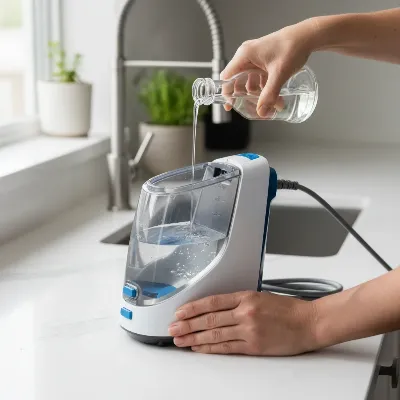 Hand safely descaling a steam cleaner with a white vinegar solution.
Cleaning the Exterior and Attachments
While descaling handles the internal mechanisms, it’s equally important to clean the exterior and attachments to maintain hygiene and functionality.
Cleaning the Exterior: After each use, and certainly as part of your deep cleaning routine, wipe down the body of your steam cleaner with a damp, lint-free cloth. This prevents dust, grime, and other airborne debris from accumulating on the surface. Avoid using any harsh detergents or solvents, as these can damage the plastic or painted finishes. A simple wipe-down keeps your machine looking new and prevents external dirt from potentially entering the internal components.
Cleaning Attachments and Nozzles: The various nozzles, brushes, and cleaning pads often bear the brunt of the cleaning tasks.
- Textile Pads: If your steam cleaner uses microfiber or textile cleaning pads, remove them after each use. Wash them in warm water, either by hand or in a washing machine, using a liquid detergent. Crucially, avoid bleach and fabric softeners, as these can degrade the pad material or leave residues that transfer to surfaces during future cleaning. Air dry the pads or tumble dry on a low heat setting. Replace pads every 3-6 months, depending on usage, to ensure optimal cleaning.
- Nozzles and Brushes: After each session, inspect nozzles and brushes for any trapped dirt, hair, or mineral residue. Rinse them under warm water. For stubborn clogs in the fine openings of nozzles, use a thin needle, a straightened paper clip, or a small, stiff-bristled brush to carefully dislodge any debris. If attachments are heavily soiled with chalky residue, you can soak them in a warm baking soda solution for several hours or even overnight to help dissolve the limescale. Rinse thoroughly afterward and allow them to air dry completely before reattaching.
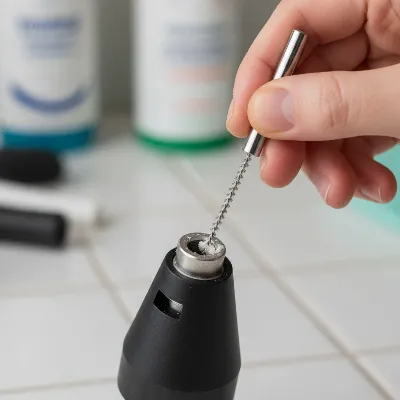 Person cleaning a clogged steam cleaner nozzle with a small brush.
Preventing Future Buildup and Maintaining Your Steam Cleaner
Consistent maintenance habits can significantly reduce the need for frequent deep descaling and prolong the life of your appliance.
- Always Use Distilled Water: This is the single most impactful tip. Distilled water is free of minerals, preventing limescale buildup from the start. While filtered water can reduce some mineral content, it’s not as effective as distilled water for long-term protection. Avoid using tap water or water treated with softeners, as softeners can replace calcium and magnesium with sodium, which can still damage the machine.
- Empty and Rinse After Each Use: Never leave stagnant water in the tank. After every cleaning session, allow the unit to cool, then drain any leftover water from the reservoir. Rinse the tank thoroughly with distilled water and leave the cap open to allow it to air dry completely before storing. This prevents mold, mildew, and bacterial growth, as well as new mineral deposits.
- Wipe Down the Exterior: A quick wipe with a damp cloth after each use keeps dust and grime from settling and helps maintain the unit’s appearance.
- Regular Descaling Schedule: Even with distilled water, a small amount of residue can accumulate. Aim to descale your steam cleaner every 1-2 months for regular users, or at least every 60 days, or whenever you notice a decline in performance (sputtering, reduced steam).
- Check Filters: Some steam cleaner models have filters. Consult your user manual for the recommended inspection and replacement schedule, especially if you live in a hard water area. Replace discolored filters promptly.
- Proper Storage: Once your steam cleaner is completely cool and dry, store it in a cool, dry place away from direct sunlight and extreme temperatures. Ensure all parts are fully dry before storage to prevent mold or mildew.
- Read the Manual: Your steam cleaner’s manufacturer manual is your best resource. It contains specific instructions for your model, including recommended cleaning methods, descaling solutions, and maintenance schedules unique to your appliance.
By incorporating these simple cleaning and maintenance practices into your routine, you can ensure your steam cleaner remains a powerful, efficient, and hygienic tool for tackling all your household cleaning needs.
Conclusion
A clean steam cleaner is a happy steam cleaner – and a much more effective one! While these appliances are robust, their continued high performance relies heavily on consistent care and attention. Mineral buildup, the silent enemy, can quickly diminish steam output, compromise hygiene, and shorten the lifespan of your valuable cleaning tool. By regularly descaling with simple solutions like white vinegar and meticulously cleaning its exterior and attachments, you not only restore its powerful sanitizing capabilities but also prevent costly repairs and replacements down the line. The golden rules: always use distilled water, empty the tank after each use, and allow components to dry thoroughly. These habits, combined with an occasional deep clean, ensure your steam cleaner remains a reliable ally in maintaining a pristine and healthy home. How will keeping your steam cleaner sparkling clean empower your next cleaning project?
Frequently Asked Questions
How often should I clean my steam cleaner?
|
Our Picks for the Best Steam Cleaner in 2026
As an Amazon Associate I earn from qualifying purchases.
|
||
| Num | Product | Action |
|---|---|---|
| 1 | Heavy-Duty Steam Cleaner - 1500W Multipurpose Handheld Floor Steamer with 22 Accessories 16ft Cord for Home, Car Detailing, Tile, Grout, Carpet, Wallpaper, Upholstery, Window, Deep Cleaning |

|
| 2 | TVD Steam Cleaner, Steamer for Cleaning with 26 Accessories, Steam Cleaner for Home with 5M Extra-Long Power Cord for Home Floor Cleaning, Tile Detailing, Grout, Upholstery. |
|
| 3 | Steam Cleaner, Portable Steamer for Cleaning with 16pcs Accessories, 6-Level Adjustable, 15s Heat-Up, Handheld Steam Cleaner for Home for Tile, Grease, Dirt, Grout, Car Detailing, Green |
|
| 4 | Wagner Spraytech C900054 905e AutoRight Multi-Purpose Steam Cleaner, 12 Accessories Included, Power Steamer for cleaning, Color May Vary |
|
| 5 | Steam Cleaner, Steam Cleaner For Home, Handheld Steamer For Cleaning With 21 Accessories, 248 °F High Temperature, Suitable for Grout, Floor. Sofas, Upholstery, White |
|
| 6 | LABIGO 10-in-1 Steam Mop with Detachable Handheld Steamer, 350ml Tank, 10s Heat-Up, 248°F Steam Cleaner, 3-Level Control and Swivel Head for Floors, Carpets, Tiles, BBQ grill Multi-Surface Clean White |
|
| 7 | Amazon Basics Multipurpose Steam Cleaner for Home with 22 Accessories, Chemical-Free Cleaning, 51oz tank, 1500W, White |
|
| 8 | Steam Cleaner, Powerful Multi-Purpose Portable Steam Cleaner, Removes Dirt and Grease, Suitable for Multiple Uses and Various Floor Surfaces, Includes 23-Piece Accessory Kit, 16.4-Foot Power Cord |
|
| 9 | Heavy Duty Steam Cleaner, 1500W High-Temperature Mop with 26 Accessories, 1.4L Portable Tank, Chemical-Free Cleaning for Floors, Tiles, Cars & More, Child Lock for Safety, Easy Operation |
|
| 10 | McCulloch MC1385 Deluxe Canister Steam Cleaner, 2-Hour Runtime, Chemical-Free, 23 Accessories: Mop Head, Brushes & More - Built for Home, Tile, Carpet, Furniture, & Personal Car Detailing |
|
The frequency depends on your usage and water type. If using tap water, descale monthly. With distilled water, every 1-2 months or every 60 days is a good guideline, or whenever you notice reduced steam, sputtering, or odors. Always empty and rinse the tank after each use.
Can I use tap water in my steam cleaner?
While some steam cleaners may allow tap water, it’s strongly discouraged. Tap water contains minerals that quickly lead to limescale buildup, reducing efficiency, clogging nozzles, and potentially damaging the heating element. Using distilled water is the best practice to prevent these issues and prolong your machine’s life.
What if my steam cleaner still smells after cleaning?
A lingering vinegar smell usually indicates that the rinsing process was not thorough enough. Fill the water tank with fresh distilled water and run it through the system again, expelling steam into a sink or bucket. Repeat this pure water cycle until the odor completely dissipates.
Is white vinegar safe for all steam cleaners?
White distilled vinegar is generally safe and highly effective for descaling most steam cleaners due to its mild acidity. However, it’s always best to consult your specific steam cleaner’s user manual before using any descaling solution, including vinegar, to ensure compatibility and avoid voiding your warranty.
How do I unclog a steam cleaner nozzle?
After the steam cleaner has cooled and been descaled internally, if a nozzle remains clogged, use a thin needle, straightened paper clip, or a small, stiff-bristled brush to gently poke and dislodge any visible debris from the nozzle opening. Soaking the detached nozzle in a warm baking soda solution can also help break down stubborn blockages.
Frequently Asked Questions
How often should I clean my steam cleaner?
The frequency depends on usage and water type. For tap water users, descale monthly. With distilled water, cleaning every 1-2 months or every 60 days is recommended, or when reduced steam or odors are noticed. Always empty and rinse the tank after each use.
Can I use tap water in my steam cleaner?
Using tap water is strongly discouraged because it contains minerals that quickly lead to limescale buildup. This buildup reduces efficiency, clogs nozzles, and can damage the heating element. Distilled water is the best practice to prevent these issues and prolong your machine's life.
What if my steam cleaner still smells after cleaning?
A lingering vinegar smell indicates insufficient rinsing. Fill the water tank with fresh distilled water and run it through the system again, expelling steam into a sink or bucket. Repeat this pure water cycle until the odor completely dissipates.
Is white vinegar safe for all steam cleaners?
White distilled vinegar is generally safe and effective for descaling most steam cleaners due to its mild acidity. However, always consult your specific steam cleaner's user manual before using any descaling solution, including vinegar, to ensure compatibility and avoid voiding your warranty.
How do I unclog a steam cleaner nozzle?
After the steam cleaner has cooled and been descaled internally, use a thin needle, straightened paper clip, or a small, stiff-bristled brush to gently dislodge any visible debris from the nozzle opening. Soaking the detached nozzle in a warm baking soda solution can also help break down stubborn blockages.
How to Descale Your Steam Cleaner
Descaling your steam cleaner removes internal mineral buildup, restoring its efficiency and prolonging its lifespan. This process involves using a vinegar or baking soda solution.
Ensure your steam cleaner is unplugged and fully cooled. Empty any remaining water from the tank. For models with a drain plug, remove it to completely drain the reservoir.
Mix equal parts white distilled vinegar and distilled water (e.g., 8 ounces of each). Alternatively, dissolve 1.5 ounces of baking soda in one quart of distilled water. Always consult your user manual for specific ratios.
Pour your chosen descaling solution into the steam cleaner's water tank. For mild buildup, let it sit for 30-60 minutes; for heavy buildup, allow up to 2 hours. Some manufacturers suggest heating the solution for 15 minutes before soaking.
After soaking, turn on your steam cleaner and run the solution through the system. Direct the steam into a sink or heat-safe bucket until the tank is empty. This flushes out dissolved mineral deposits.
Unplug the unit and let it cool. Fill the tank completely with fresh distilled water and run it through the system until empty. This crucial step removes any residual descaling solution and loose mineral particles.

I tried the cleaning steps, especially focusing on the exterior and attachments. It definitely helped with some of the grime. However, I still feel like my steam cleaner isn’t quite as powerful as it used to be, even after the descaling. Maybe I waited too long to start regular maintenance.
I’m a regular user of my steam cleaner, so the recommendation for maintenance every 1-2 months really hit home. I’ve been slacking, and could tell my machine wasn’t as efficient. After a thorough clean, including the heating element, it’s back to full power. So glad I found these tips!
This was a lifesaver! I had no idea how important it was to clean the nozzles. Mine were definitely clogged, and I was getting really frustrated with the inconsistent steam output. Following the advice to clean them meticulously made a huge difference. My floors are sparkling again.
I used to think my steam cleaner was just getting old, but after reading about mineral buildup, I realized I was the problem! The white vinegar solution trick worked wonders. My steam cleaner is producing so much more steam now, it’s like I have a brand new machine. Definitely recommend regular descaling.