Descaling your steam cleaner at home is a straightforward process that restores performance and extends its lifespan, primarily by removing limescale buildup from hard water. You can effectively descale your appliance using common household items like white vinegar or baking soda solutions, typically requiring 30 minutes to several hours depending on the method and severity of buildup. Regular descaling every 1-12 months, combined with using distilled water, prevents issues like reduced steam output and spitting water, ensuring your steam cleaner operates efficiently.
Understanding Limescale and Why Descaling Your Steam Cleaner Matters
Limescale is a hard, chalky deposit made up primarily of calcium carbonate, which forms when hard water evaporates and leaves mineral residues behind. In a steam cleaner, this buildup occurs within the water tank, heating elements, and internal tubing, wherever water is heated and converted into steam. Over time, these mineral deposits can accumulate significantly, creating a range of problems for your appliance.
The impact of limescale on your steam cleaner’s performance is considerable. It can lead to reduced steam output, meaning your cleaner struggles to produce the high-temperature vapor needed for effective sanitization and deep cleaning. Limescale can also clog nozzles and internal components, potentially causing the machine to spit water, leak, or even stop producing steam altogether. This decreased efficiency not only hampers your cleaning results but also forces the appliance to work harder, consuming more energy and potentially leading to premature wear and tear or even permanent damage. Regular descaling is therefore not just about improving cleaning results; it’s a crucial maintenance step that extends the lifespan of your device, maintains its heating efficiency, and ensures it continues to provide hygienic cleaning for your home. For shop curated reviews on this site.
Preparing Your Steam Cleaner for Descaling
Before you begin the descaling process, proper preparation is essential to ensure both your safety and the effectiveness of the cleaning. Always prioritize safety when working with electrical appliances and hot components.
First and foremost, unplug your steam cleaner from the electrical outlet and allow it to cool completely. Attempting to descale a hot or recently used appliance can be dangerous due to hot water, steam, and potential pressure. Once cool, empty any existing water from the tank. Most steam cleaners have a drain plug or a simple way to pour out residual water. This ensures you start with a clean slate for your descaling solution. Lastly, and perhaps most critically, consult your steam cleaner’s owner’s manual. While DIY methods are widely effective, some manufacturers may have specific recommendations, warnings, or even their own descaling products. Following their guidelines helps avoid voiding warranties or causing unintended damage to your specific model.
DIY Descaling Methods: Step-by-Step Guide
Descaling your steam cleaner at home can be effectively achieved using common household items. Here, we outline the two most popular and safe DIY methods: using white vinegar and utilizing a baking soda solution.
Method 1: White Vinegar Solution
White vinegar is a natural acid that excels at dissolving mineral deposits. It’s a highly effective and readily available descaling agent.
- Ingredients: White vinegar, distilled water.
- Steps:
- Mix the Solution: Create a descaling mixture by combining equal parts white vinegar and distilled water (e.g., 1 cup vinegar to 1 cup water). For lighter buildup, a 1:2 ratio of vinegar to water can also be effective.
- Fill the Tank: Carefully pour the vinegar-water solution into your steam cleaner’s empty water tank. Do not overfill.
- Heat and Steam (Briefly): Plug in the steam cleaner and allow it to heat up. Once ready, briefly activate the steam, directing it into a sink or bucket for about 30 seconds to allow the solution to circulate into the heating elements.
- Let it Sit: Unplug the unit and allow the solution to sit inside the tank for at least 30 minutes. For heavy limescale, you can let it sit for several hours or even overnight. This soaking time allows the acid to break down the mineral deposits.
- Empty and Rinse Thoroughly: After soaking, carefully drain the vinegar solution from the tank. Now, fill the tank with fresh, clean water and empty it several times. This is crucial to flush out all the loosened limescale particles and vinegar residue.
- Final Rinse Cycle: Fill the tank one last time with distilled water. Plug in the unit, let it heat up, and run it until the tank is empty, directing the steam into a sink or bucket. This final steam rinse ensures all internal components are free of vinegar odor and residue.
- Pros & Cons: White vinegar is highly effective and natural. The main drawback is its strong, lingering odor, which dissipates after thorough rinsing and airing out.
Method 2: Baking Soda Solution
Baking soda is another gentle yet effective cleaning agent that can help tackle limescale, particularly when used with heat.
- Ingredients: Baking soda, distilled water.
- Steps:
- Prepare the Mixture: Mix 1.5 ounces (approximately 3 tablespoons) of baking soda with 1 quart (about 1 liter) of distilled water. Stir until the baking soda is mostly dissolved.
- Fill the Tank: Pour this baking soda solution into the empty water tank of your steam cleaner.
- Heat and Soak: Secure the tank cap and plug in the unit. Allow the steam cleaner to heat up fully and stay warm for 1 to 2 hours. For very stubborn deposits, extend this soaking time.
- Brief Run and Cool Down: After the soaking period, run the unit for about one minute, directing the steam away from surfaces. Then, unplug the power cord and allow the unit to cool completely, which may take 3 to 4 hours.
- Drain and Flush: Once cool, remove the drain plug (if applicable) or empty the tank. Flush the tank thoroughly with clean water multiple times to remove all dissolved minerals and baking soda residue.
- Pros & Cons: Baking soda is less acidic than vinegar, making it gentler on some components and producing no strong odor. It requires a longer soaking time and might be less aggressive on very heavy limescale.
Commercial Descaling Solutions
While DIY methods are often sufficient, some manufacturers recommend or sell specific descaling solutions for their models.
- Instructions: If you choose to use a commercial descaler, always follow the product’s specific instructions meticulously. These solutions are formulated for particular materials and might have unique application procedures.
- Safety: Always wear appropriate protective gear, such as gloves, and ensure good ventilation when using chemical descalers.
Important Considerations:
- Always use distilled water for regular operation of your steam cleaner to prevent future limescale buildup. Tap water, especially in hard water areas, is the primary cause of mineral deposits.
- Never use harsh chemicals like bleach, ammonia, or abrasive cleaners inside your steam cleaner. These can severely damage internal components, seals, and hoses, rendering your appliance unusable and potentially dangerous.
Post-Descaling Care and Prevention
Once you’ve completed the descaling process, proper post-cleaning care and preventative measures are essential to ensure your steam cleaner remains in optimal condition.
The most critical step after descaling is to rinse your steam cleaner thoroughly. This cannot be overemphasized. Fill the water tank with fresh, clean water (preferably distilled) and run the unit, directing the steam into a sink or bucket, until the tank is empty. Repeat this rinsing process at least two to three times to completely flush out any remaining descaling solution and loosened mineral particles. You want to eliminate any lingering odors from vinegar or residues from other cleaning agents.
After the thorough rinsing, perform a brief “test run” with clean, distilled water, steaming away from any surfaces. This helps to ensure that all internal components are clear and that your steam cleaner is producing pure, clean steam once again.
For long-term maintenance and prevention, integrate these practices into your routine:
- Always use distilled or demineralized water for everyday cleaning. This is the single most effective way to prevent limescale from forming in the first place.
- Empty the water tank after each use. Do not leave standing water in the tank, as this can lead to new mineral deposits forming as the water evaporates.
- Descaling Frequency: The frequency of descaling depends largely on the hardness of your local water and how often you use your steam cleaner. In areas with very hard water or with frequent use, descaling every 1-3 months might be necessary. For softer water or occasional use, every 6-12 months may suffice. Your owner’s manual might offer specific guidance.
> “Preventative measures are key. Using distilled water consistently will save you countless hours of descaling and extend your steam cleaner’s life significantly.” – Dr. Emily R. Chen, Appliance Care Specialist
Expert Tips for a Longer-Lasting Steam Cleaner
Beyond regular descaling and using distilled water, a few expert tips can further enhance the longevity and performance of your steam cleaner. These small habits can make a big difference in maintaining your appliance and ensuring it’s always ready for effective cleaning.
When not in use, ensure your steam cleaner is stored properly. After emptying the tank and allowing all components to dry completely, store the unit in a cool, dry location. Avoid storing it in areas subject to extreme temperatures, which can affect the integrity of plastic parts and seals. Regularly inspect your steam cleaner for any signs of wear, such as cracked hoses, damaged power cords, or worn seals. Addressing these issues promptly can prevent larger problems and ensure safe operation.
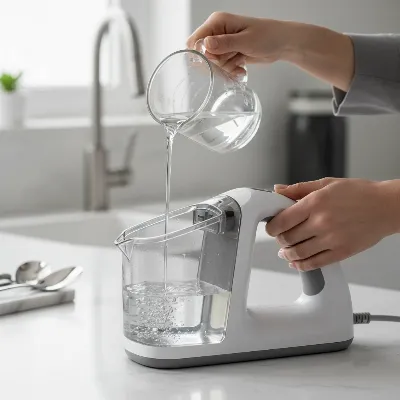 Person carefully pouring white vinegar solution into a steam cleaner tank for descaling
You might encounter common issues related to limescale even before a full descaling is due. If your steam cleaner is producing inconsistent steam, spitting water, or making unusual noises, these are often early indicators of mineral buildup. A quick mini-descale or even just a thorough rinse with distilled water can sometimes mitigate these minor issues before they become major problems. Also, remember to regularly clean your attachments and accessories, as they can also accumulate residue and affect the overall cleaning performance.
Conclusion
Maintaining a clean and efficient steam cleaner is vital for effective household sanitization and extends the life of your appliance. Limescale, while an inevitable byproduct of hard water use, doesn’t have to be a permanent problem. By understanding its impact and applying simple, safe DIY descaling methods—primarily using white vinegar or baking soda—you can easily restore your machine’s performance. Remember to prioritize safety, consult your manufacturer’s manual, and rinse thoroughly after each descaling treatment. Making the switch to distilled water for daily use and regularly emptying the tank are simple preventative steps that will keep your steam cleaner in top condition for years to come. What are your go-to tips for maintaining household appliances?
Frequently Asked Questions
How often should I descale my steam cleaner?
The frequency depends on your water hardness and usage. For hard water areas or frequent use, descale every 1-3 months. If your water is soft or you use it occasionally, every 6-12 months might be sufficient. Consult your manual for specific guidance.
Can I use tap water in my steam cleaner?
While possible, using tap water, especially hard water, is the primary cause of limescale buildup. It is highly recommended to use distilled or demineralized water to prevent mineral deposits and prolong your steam cleaner’s lifespan.
What if my steam cleaner still isn’t steaming after descaling?
If your steam cleaner still isn’t producing steam after descaling, ensure it’s properly plugged in and heated. The issue might be more than limescale, potentially a mechanical failure or a heavily clogged nozzle that requires manual clearing.
Is lemon juice a good substitute for vinegar in descaling?
While lemon juice is acidic and can dissolve some mineral deposits, it contains sugars that can leave sticky residues and potentially attract mold or bacteria. White vinegar is generally preferred for descaling appliances due to its effectiveness and clean rinse.
How do I know if my steam cleaner needs descaling?
Common signs include reduced steam output, inconsistent steam, spitting water, unusual noises, or visible white, chalky residue around the water tank or nozzle. If your cleaning results are diminishing, it’s likely time for a descale.
Frequently Asked Questions
How often should I descale my steam cleaner?
The frequency of descaling depends on your local water hardness and how often you use the appliance. For hard water areas or frequent use, descale every 1-3 months; for softer water or occasional use, every 6-12 months is typically sufficient. Always consult your steam cleaner's owner's manual for specific recommendations.
Can I use tap water in my steam cleaner?
Using tap water, especially hard water, is the primary cause of limescale buildup within your steam cleaner. To prevent mineral deposits and prolong the appliance's lifespan, it is highly recommended to use distilled or demineralized water for regular operation. This significantly reduces the need for frequent descaling.
What if my steam cleaner still isn't steaming after descaling?
If your steam cleaner still isn't producing steam after a thorough descaling, first ensure it is properly plugged in and has reached its operating temperature. The issue might extend beyond limescale, potentially indicating a mechanical failure, a heavily clogged nozzle requiring manual clearing, or another internal component problem. Refer to your owner's manual for troubleshooting specific to your model.
Is lemon juice a good substitute for vinegar in descaling?
While lemon juice is acidic and can dissolve some mineral deposits, it is generally not recommended as a substitute for white vinegar in descaling appliances. Lemon juice contains natural sugars that can leave sticky residues inside the steam cleaner, potentially attracting mold or bacteria. White vinegar is preferred due to its effectiveness and ability to rinse cleanly without leaving unwanted residues.
How do I know if my steam cleaner needs descaling?
Common indicators that your steam cleaner needs descaling include reduced steam output, inconsistent steam production, spitting water instead of a steady stream, unusual noises during operation, or visible white, chalky residue around the water tank or nozzle. If you notice a decrease in your cleaning results, it's a strong sign that mineral buildup is affecting performance.
How to Descale Your Steam Cleaner with White Vinegar
Descale your steam cleaner effectively using a simple white vinegar and distilled water solution to remove limescale buildup.
Combine equal parts white vinegar and distilled water (e.g., 1 cup of each) to create your descaling mixture. For lighter buildup, a 1:2 ratio of vinegar to water can also be used.
Carefully pour the vinegar-water solution into your steam cleaner's empty water tank, ensuring not to overfill. Plug in the unit, allow it to heat up, then briefly activate the steam for about 30 seconds, directing it into a sink or bucket to circulate the solution.
Unplug the steam cleaner and let the vinegar solution sit inside the tank for at least 30 minutes. For heavy limescale deposits, extend the soaking time to several hours or even overnight to allow the acid to effectively break down the minerals.
After soaking, carefully drain the vinegar solution from the tank. Fill the tank with fresh, clean water (preferably distilled) and empty it multiple times to flush out all loosened limescale particles and vinegar residue.
Fill the tank one last time with distilled water. Plug in the unit, let it heat up, and run it until the tank is empty, directing the steam into a sink or bucket. This final steam rinse ensures all internal components are free of any lingering vinegar odor or residue.

My steam cleaner was making weird noises and barely producing any steam. I was about to buy a new one, but then I saw the part about calcium carbonate buildup. I followed the instructions for descaling with vinegar, and it completely fixed the problem. So glad I didn’t have to spend money on a replacement!
I always forget to descale my steam cleaner until it’s practically useless. This guide was super helpful in reminding me about using distilled water to prevent future buildup. I used to just use tap water, which explains why I was descaling every couple of months. Hopefully, this tip will extend the time between cleanings!
I’ve been struggling with my steam cleaner spitting water and having really low steam output lately. I tried the white vinegar method mentioned here, and wow, what a difference! It took about an hour, but my cleaner is working like new again. Definitely a game-changer for anyone with hard water issues.
The baking soda solution worked okay for me, but it felt a bit more involved than I expected. I still noticed a little bit of reduced steam output even after letting it sit for a few hours. Maybe my limescale buildup was just too severe, or I needed to repeat the process. It did help some, though.