Revitalizing your vehicle’s interior and exterior to a showroom finish can feel like a daunting task, especially when confronted with stubborn grime, spills, and hidden contaminants. For years, professional detailers have harnessed a secret weapon for unparalleled cleanliness: the steam cleaner. This powerful, chemical-free tool has become indispensable for transforming even the most neglected vehicles into pristine sanctuaries. If you’re looking to elevate your car detailing game, whether as a seasoned professional or an enthusiastic DIYer, understanding the nuances of modern steam cleaning technology is essential. This comprehensive guide will navigate you through the world of automotive steam cleaners, from their fundamental principles to a curated list of the top models poised to dominate in 2026, ensuring you find the perfect solution for a spotless ride.
Understanding Automotive Steam Cleaners
An automotive steam cleaner is a specialized device that uses high-temperature, pressurized steam to clean and sanitize various surfaces within and on a vehicle. The principle is simple yet highly effective: water is heated in a boiler until it converts into dry vapor steam, which is then expelled through a nozzle or attachment. This superheated steam penetrates deep into surfaces, dissolving dirt, grease, and grime while killing bacteria, viruses, and allergens without the need for harsh chemicals.
Compared to traditional cleaning methods that often rely on detergents, excessive water, and manual scrubbing, steam cleaning offers several distinct advantages. It provides a deep, sanitizing clean that removes tough stains and odors, minimizes water usage, and reduces drying times. While traditional methods can leave chemical residues or soak fabrics, steam leaves surfaces virtually dry and free of harmful substances, making it safer for delicate materials and electronic components. However, steam cleaners are not extractors; they loosen dirt, which then needs to be wiped away with a microfiber cloth, sometimes requiring a follow-up with an extractor for deeply embedded contaminants.
Common Types of Steam Cleaners for Car Detailing
Choosing the right steam cleaner for car detailing depends largely on the scale and type of cleaning tasks you perform. Steam cleaners generally fall into a few main categories, each with specific characteristics, advantages, and ideal applications in an automotive context.
Handheld Steam Cleaners
Handheld steam cleaners are the most compact and portable option, designed for quick cleanups and reaching tight, awkward spaces. They are typically lightweight, affordable, and easy to store, making them a popular choice for personal use or as a supplementary tool for professional detailers. These units often have smaller water tanks, resulting in shorter continuous steam times and lower pressure output compared to larger models.
- Pros: Highly portable, budget-friendly, fast heating, excellent for spot cleaning and hard-to-reach areas like vents, cup holders, and dashboard crevices.
- Cons: Limited tank capacity and runtime, lower steam pressure, not ideal for extensive or heavy-duty cleaning tasks.
- Applications: Targeted stain removal, sanitizing high-touch surfaces, cleaning tight corners, refreshing upholstery.
Canister Steam Cleaners
Canister steam cleaners, also known as upright or tank-style steamers, are larger, wheeled units with bigger boilers and water tanks. This design allows for longer continuous steam sessions and generally higher steam pressure and temperature. They are a popular choice for both serious DIY enthusiasts and mobile detailers who require more power and versatility than handheld models.
- Pros: Longer runtime, higher steam pressure for tackling tougher stains, more versatile with a wider array of attachments, often built with greater durability.
- Cons: Less portable than handheld models, heavier, requires more storage space, typically a higher initial cost.
- Applications: Full interior detailing, deep cleaning of carpets and upholstery, engine bay cleaning, sanitizing larger surfaces.
Professional/Industrial Steam Cleaners
These are the powerhouses of the steam cleaning world, engineered for intensive daily use in demanding auto detailing environments. Professional and industrial steam cleaners boast the highest steam pressures, largest water tanks for extended operation, and most robust construction, often featuring stainless steel boilers and advanced safety mechanisms. Some industrial models can even be diesel-powered for maximum mobility and output in remote locations.
- Pros: Exceptional power and pressure for the most stubborn dirt and grime, continuous steam for prolonged use, superior durability and longevity, comprehensive range of specialized attachments, advanced safety features.
- Cons: Bulkiest and least portable, highest investment cost, often overkill for casual home users.
- Applications: High-volume auto detailing businesses, car dealerships, comprehensive interior and exterior cleaning, heavy-duty stain removal, engine degreasing, and even exterior pre-washes.
Comparing Car Detailing Steam Cleaner Types
To help you make an informed decision, here’s a detailed comparison of the different types of steam cleaners suitable for car detailing:
| Feature | Handheld Steam Cleaner | Canister Steam Cleaner | Professional/Industrial Steam Cleaner |
|---|---|---|---|
| Portability | Excellent (lightweight, compact) | Good (wheeled, manageable) | Limited (bulky, heavy) |
| Steam Pressure | Low (2-3 bar / 30-45 PSI) | Medium-High (4-6+ bar / 60-90+ PSI) | High (50-130 PSI, some up to 9 bar / 130 PSI) |
| Tank Capacity | Small (0.3-0.5L) | Medium (1-2L) | Large (2L+, for continuous operation) |
| Runtime | Short (10-15 minutes continuous) | Medium (30-60+ minutes continuous) | Long (60-120+ minutes continuous, often unlimited with refill) |
| Heating Time | Fast (under 4-5 minutes) | Moderate (5-10 minutes) | Moderate (5-15 minutes, depending on size) |
| Best Use | Spot cleaning, tight spaces, quick refreshes | Full interior detailing, stubborn stains, frequent cleaning | Commercial detailing, heavy-duty tasks, intensive use |
| Cost | Budget-friendly ($50-$100) | Mid-range ($150-$400) | Premium ($500-$2500+) |
| Durability | Basic construction, often plastic components | Good, often with durable plastic or metal exteriors | Excellent, stainless steel boilers, robust build |
Essential Buying Guide for Car Detailing Steam Cleaners
Choosing the ideal steam cleaner requires careful consideration of several factors to ensure it meets your specific detailing needs and budget.
Key Factors to Consider
- Type of Surfaces to Clean: Identify if your primary focus is on upholstery, carpets, dashboards, engine bays, or a mix of all. Different cleaners excel in different areas. For instance, a portable handheld might be enough for light interior touch-ups, while a powerful canister is better for deep carpet cleaning or engine degreasing.
- Frequency of Use: If you’re a professional detailer or frequently clean multiple vehicles, a durable, high-capacity, and continuous-steam model is a must. For occasional use, a mid-range canister or even a robust handheld might suffice.
- Budget: Steam cleaners range from under $100 to over $2,000. Set a realistic budget based on your needs and expected return on investment. Remember that investing in a higher-quality machine can save money in the long run through durability and efficiency.
- Steam Pressure and Temperature: Look for units that deliver at least 50 PSI and temperatures above 200°F (93°C) for effective cleaning and sanitization. Professional models often reach 60-90 PSI and 275°F to 338°F for optimal performance.
- Tank Capacity and Continuous Steam: A larger water tank allows for longer cleaning sessions without frequent refills. Continuous steam functionality, where you can refill the tank without shutting down, is highly beneficial for extended detailing jobs.
- Attachments and Accessories: A diverse set of attachments significantly increases versatility. Look for various brushes (nylon, brass for different surfaces), nozzles (jet, concentrated), squeegees for windows, and upholstery tools.
- Heating Time: While not critical for performance, a faster heating time improves efficiency, especially if you have multiple quick jobs or need to refill frequently.
- Portability and Maneuverability: For mobile detailers, a lightweight design, wheels, and a long hose/power cord are crucial for ease of use.
- Durability: Stainless steel boilers are a hallmark of durable, long-lasting steam cleaners that can withstand high temperatures and pressures over time.
Expert Advice for Your Purchase
- Prioritize Reputable Brands: Stick to well-known brands with a track record of quality and customer support. This often translates to better product reliability and easier access to replacement parts or accessories.
- Read User Reviews: Real-world experiences from other detailers or car owners can provide invaluable insights into a cleaner’s performance, durability, and any potential quirks. Pay attention to comments regarding specific car detailing applications.
- Compare Features vs. Price: Don’t just go for the cheapest option. Evaluate the features, specifications, and included accessories against the price to ensure you’re getting the best value for your investment. Sometimes paying a little more upfront for a better-equipped and more durable machine can save you frustration and costs down the line.
“A common mistake is underestimating the power you’ll actually need. For serious car detailing, aim for at least 50 PSI to truly lift grime effectively. Anything less, and you’re just moving dirt around.” – Admin, ReviewCinch.com, Steam Cleaner Expert
Top 5 Best Steam Cleaners for Car Detailing in 2026
After extensive research and considering the rigorous demands of automotive detailing, here are our top picks for the best steam cleaners in 2026, offering a range of options for every need and budget.
1. Sargent Steam Cleaner BRZ2 Deluxe Package
The Sargent Steam Cleaner BRZ2 Deluxe Package stands out as a top-tier professional choice for serious auto detailers. This fully equipped system delivers powerful, pressurized steam vapor at 298°F, making it exceptionally effective at tackling deeply embedded dirt, grease, and grime. Its robust build quality ensures longevity, even with frequent commercial use.
- Pros: Best overall performance, high steam pressure and temperature, continuous steam functionality, extensive deluxe accessory package for versatile detailing tasks, built for professional durability.
- Cons: Premium price point, larger footprint may be less convenient for smaller workspaces.
- Price Range: $$$$
- Overall Assessment: An investment for professionals seeking unparalleled cleaning power and reliability across all car detailing applications, from interior upholstery to engine bays.
2. Dupray Neat Steam Cleaner
The Dupray Neat Steam Cleaner is a sleek, powerful, and surprisingly compact canister unit that delivers professional-grade cleaning with superheated 275°F steam. It’s highly versatile, adept at lifting dirt, grease, and stains from virtually every surface in a car without harsh chemicals. Its continuous steam feature and a comprehensive 17-piece accessory kit make it a favorite for those who demand efficiency and eco-consciousness.
- Pros: Excellent steam temperature, long continuous steam time, wide range of attachments for diverse cleaning, minimalist design, effective on a variety of surfaces including upholstery and dashboards.
- Cons: May require slightly longer heat-up time than smaller units, mid-range price.
- Price Range: $$$
- Overall Assessment: An excellent all-rounder for both professional detailers and dedicated enthusiasts who need powerful, chemical-free cleaning with great versatility and durability.
3. McCulloch MC1385 Deluxe Canister Steam Cleaner
The McCulloch MC1385 is a heavy-duty canister steam cleaner renowned for its large 64-ounce water tank, providing up to 120 minutes of continuous steam. This powerhouse is ideal for extensive car detailing jobs, allowing you to deep clean without constant refills. It features variable steam control and comes with 23 versatile accessories, making it effective for everything from removing stubborn carpet stains to sanitizing vents.
- Pros: Massive water tank for exceptionally long runtime, high steam pressure, variable steam control for different surfaces, extensive accessory kit, durable construction.
- Cons: Can be bulky and heavy, longer heat-up time compared to smaller units.
- Price Range: $$$
- Overall Assessment: A fantastic choice for detailers who require long, uninterrupted cleaning sessions and robust performance for heavy-duty tasks, offering great value for its power and capacity.
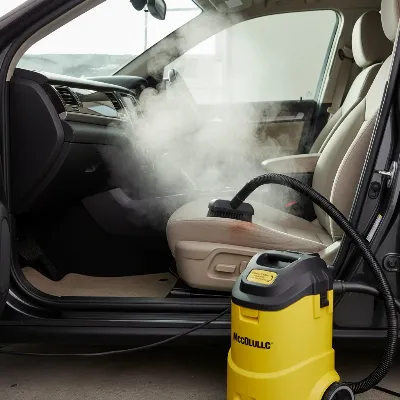 McCulloch MC1385 Deluxe Canister Steam Cleaner tackling car interior grime with steam
4. Wagner Spraytech 905e AutoRight Steam Cleaner
Designed with auto lovers in mind, the Wagner Spraytech 905e AutoRight steam cleaner is a go-to for vehicle detailing and beyond. It uses pressurized steam at 212°F to lift dirt, grease, and grime from leather, carpet, dashboards, and wheels, all without chemicals. Its built-in handle and wheels ensure ease of movement, and it comes with 12 handy accessories, giving you the flexibility to clean various surfaces effectively.
- Pros: Budget-friendly, specifically designed for automotive use, good steam temperature for effective cleaning, easy to maneuver with wheels, includes essential accessories.
- Cons: May have lower pressure than professional models, tank capacity is moderate.
- Price Range: $$
- Overall Assessment: An excellent budget-friendly option for car enthusiasts and DIY detailers looking for a dependable and effective steam cleaner specifically tailored for vehicle interiors and some exterior components.
5. Bissell 3618 SpotClean ProHeat Portable Spot Cleaner (with HydroSteam Technology)
The Bissell 3618, equipped with HydroSteam Technology, offers a unique “steam plus cleaning approach” that sets it apart as a portable solution for fabric-heavy car interiors. It combines steam with a cleaning solution and powerful suction, making it highly effective for refreshing upholstery and tackling tough, oily messes or enzyme-based stains common in family vehicles. While primarily a spot cleaner, its steam capabilities make it a strong contender for targeted interior detailing.
- Pros: Portable and compact design, HydroSteam Technology for enhanced stain removal, effective on fabric seats and carpets, integrated suction for extraction, tackles a variety of stain types.
- Cons: Not a pure steam cleaner (uses solution), smaller tank capacity, primarily for spot cleaning rather than full car steaming.
- Price Range: $$
- Overall Assessment: Ideal for individuals frequently dealing with spills, pet messes, or mystery stains on car upholstery and carpets, offering a powerful portable solution for targeted interior cleaning and odor removal.
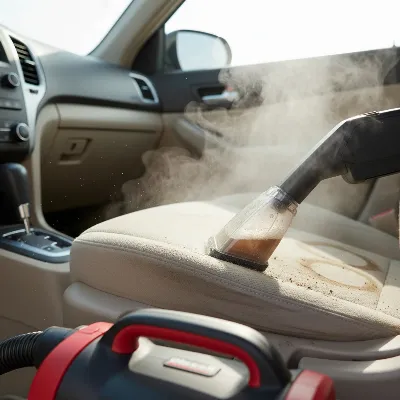 Bissell 3618 SpotClean ProHeat cleaning a car seat with steam and suction
Tips for Using and Maintaining Your Car Detailing Steam Cleaner
To maximize the effectiveness and lifespan of your car detailing steam cleaner, proper usage and maintenance are paramount.
Safe and Effective Usage
- Pre-Vacuum Thoroughly: Always vacuum the surfaces before steam cleaning to remove loose dirt and debris. This prevents mud or particles from being pushed deeper into fabrics by the steam.
- Test in an Inconspicuous Area: Before applying steam to a large area, always test on a small, hidden spot to ensure it doesn’t cause discoloration or damage, especially on delicate fabrics, leather, or painted surfaces.
- Use Distilled Water: Always use distilled or demineralized water in your steam cleaner. Tap water contains minerals that can lead to scale buildup in the boiler, reducing efficiency and potentially damaging the unit over time.
- Work in Small Sections: Tackle cleaning in small, manageable sections. Apply steam evenly, then immediately wipe away the loosened dirt with a clean microfiber cloth. This prevents dirt from redepositing as the surface cools.
- Ventilate the Vehicle: Ensure good ventilation when steam cleaning interiors to allow any moisture to evaporate quickly and prevent condensation buildup.
- Be Mindful of Electronics: Exercise extreme caution around electronic components like instrument clusters, radios, and climate controls. Avoid direct steam application to these areas to prevent damage.
- Use the Right Attachment: Utilize the correct nozzle or brush for the specific surface you are cleaning. For example, detail brushes are great for crevices, while upholstery tools work best on fabric seats.
Maintenance for Longevity
- Descaling Regularly: Mineral buildup (limescale) from water is the biggest enemy of steam cleaners. Follow the manufacturer’s instructions for regular descaling, typically using a white vinegar solution, to keep the boiler and internal components clean.
- Empty and Dry After Each Use: After each use, allow the unit to cool, then drain any remaining water from the tank. Leave the tank cap open to allow it to air dry, preventing mold or mildew growth.
- Clean Attachments: Rinse all brushes, nozzles, and other attachments thoroughly after each use. Store them dry in their designated spots to prevent damage or loss.
- Inspect Hoses and Cords: Periodically check the hose and power cord for any signs of wear, cracks, or damage. Replace them if necessary to ensure safe operation.
- Proper Storage: Store your steam cleaner in a clean, dry place, protected from extreme temperatures. If you live in a seasonal area, ensure it’s not left in an unheated garage during winter to prevent freezing damage.
Common Troubleshooting Tips
- No Steam Output: Check if the unit is plugged in, powered on, and if the water tank is filled. The boiler may need time to heat up. If there’s still no steam, descaling might be required.
- Low Steam Pressure: This often indicates scale buildup in the boiler or nozzle. Perform a descaling procedure and ensure the nozzle is clear of any blockages.
- Water Leaking: Check that all connections (hoses, attachments) are securely fastened. If the leak is from the unit itself, it might indicate a seal issue requiring professional service.
Conclusion
Choosing the best steam cleaner for car detailing is a pivotal step towards achieving professional-grade cleanliness and protecting your vehicle’s value. By understanding the core principles of steam cleaning, recognizing the differences between handheld, canister, and professional models, and considering essential factors like pressure, temperature, and portability, you can confidently select a machine perfectly suited to your needs. Our top picks for 2026, including the powerful Sargent Steam BRZ2, versatile Dupray Neat, heavy-duty McCulloch MC1385, auto-specific Wagner 905e, and innovative Bissell 3618, offer exceptional performance across a spectrum of applications. With proper usage and diligent maintenance, your chosen steam cleaner will not only revolutionize your cleaning routine but also ensure your car looks its best for years to come. What gleaming surfaces will you tackle first with the pure power of steam?
Frequently Asked Questions
Is steam cleaning safe for all car interior surfaces?
Steam cleaning is generally safe for most car interior surfaces, including cloth upholstery, leather (when used carefully with a microfiber cloth), vinyl, plastic, and glass. However, it’s crucial to avoid direct, prolonged steam application on delicate electronics, decals, or window tints, and always perform a spot test on an inconspicuous area first.
Can I use a car detailing steam cleaner to clean my engine bay?
Yes, many professional-grade and powerful canister steam cleaners are highly effective for cleaning engine bays. The high-temperature steam helps to break down grease, oil, and grime without using harsh chemicals, leaving your engine looking refreshed. Always ensure the engine is cool and protect sensitive electronic components from direct steam.
How often should I steam clean my car?
The frequency of steam cleaning depends on your car’s usage and how quickly it accumulates dirt. For personal vehicles, a thorough steam clean every 3-6 months is often sufficient, with spot cleaning as needed. Professional detailers may steam clean vehicles daily, depending on client demand and the vehicle’s condition.
What kind of water should I use in my steam cleaner?
It is strongly recommended to use distilled or demineralized water in your steam cleaner. Tap water contains minerals that can cause limescale buildup in the machine’s boiler and internal components, leading to reduced efficiency and potential damage over time.
Are steam cleaners effective at removing odors from car interiors?
Yes, steam cleaners are highly effective at removing odors from car interiors. The high temperature of the steam kills odor-causing bacteria and breaks down odor molecules embedded in upholstery and carpets, rather than just masking them. For best results, combine steam cleaning with thorough vacuuming and ensure proper ventilation.
What is the ideal PSI for a car detailing steam cleaner?
For effective car detailing, a steam cleaner with a minimum of 50 PSI is recommended to loosen stubborn dirt and stains. Professional detailers often prefer models in the 60-90 PSI range, as this provides an optimal balance of power to tackle various grime without being too aggressive for delicate surfaces.
