Are you tired of scrubbing stubborn, discolored grout lines that refuse to come clean? Traditional cleaning methods often fall short, leaving behind dirt and grime that dulls the appearance of your beautiful tiled surfaces. The answer lies in the incredible power of steam. A high-quality canister steam cleaner can revolutionize your cleaning routine, transforming dingy grout into a pristine showcase without the need for harsh chemicals. This comprehensive guide will walk you through what steam cleaners are, the different types available, and crucially, highlight the top 5 canister steam cleaners specifically designed to tackle even the most challenging grout stains in your home.
What Is a Steam Cleaner?
A steam cleaner is a household appliance that utilizes pressurized, high-temperature steam to clean and sanitize various surfaces. Unlike traditional cleaning methods that rely on detergents and scrubbing, steam cleaners convert water into superheated steam, which is then directed onto a surface. This intense heat and pressure effectively loosen dirt, grease, and grime, while also killing bacteria, viruses, mold, and dust mites. The process is chemical-free, making it an environmentally friendly and safe option for homes with children, pets, or individuals with sensitivities to cleaning agents.
Compared to conventional cleaning, steam cleaning offers several advantages. It provides a deeper clean and sanitization, eliminates odors, and can reach into crevices that brushes often miss. However, steam cleaners are not suitable for all surfaces, such as unsealed hardwood, certain porous stones, or delicate fabrics, as the heat and moisture can cause damage. Always check the manufacturer’s recommendations for your specific surfaces.
Popular Types of Steam Cleaners
The market offers several types of steam cleaners, each designed for different cleaning tasks and preferences. Understanding their unique characteristics helps in choosing the best model for your needs, especially when focusing on detailed jobs like grout cleaning.
Handheld Steam Cleaners
Handheld steam cleaners are compact, lightweight devices ideal for quick clean-ups and small, targeted areas. They are easy to maneuver, making them excellent for countertops, sinks, bathroom fixtures, and small grout lines. Their portability is a significant advantage, allowing users to tackle messes on the go. However, their small water tanks mean shorter run times and frequent refills, and their lower steam pressure might not be sufficient for deep-seated grout stains or larger areas.
Steam Mops
Steam mops are designed primarily for floor cleaning. They resemble traditional m mops but use steam to sanitize and clean hard flooring surfaces like tile, sealed hardwood, and laminate. Many steam mops come with detachable handheld units, offering a dual-purpose solution. They are generally lightweight and heat up quickly, providing continuous steam for efficient floor care. While good for general floor cleanliness, their effectiveness on deeply stained grout might vary, and the attached mop head can sometimes limit access to tight corners.
Canister Steam Cleaners
Canister steam cleaners are the workhorses of the steam cleaning world. These units feature a large water tank on wheels, connected to a long hose and various attachments. Their generous water capacity allows for extended cleaning sessions without frequent refills, and they typically generate higher steam pressure and hotter temperatures than handhelds or steam mops. This power makes them exceptionally effective for heavy-duty tasks, including large tiled areas, tough grease, and deeply embedded grout grime. While less portable than handhelds, their wheeled design eases movement around the house, and the extensive range of specialized brushes and nozzles makes them incredibly versatile for tackling diverse cleaning challenges, including targeted grout rejuvenation.
Industrial Steam Cleaners
Industrial steam cleaners are large, powerful machines designed for commercial or heavy-duty professional use. They boast massive water tanks, extremely high steam pressure and temperature, and durable construction to withstand continuous, rigorous use. These machines are built for extensive cleaning projects in large spaces like commercial kitchens, hospitals, or manufacturing facilities. Their size, cost, and specialized features make them unsuitable and unnecessary for typical residential use.
Comparing Steam Cleaner Types
Choosing the right steam cleaner involves weighing various factors. The following table provides a concise comparison of the most common types, focusing on aspects relevant to residential cleaning, particularly for tile and grout.
| Feature | Handheld Steam Cleaner | Steam Mop (often 2-in-1) | Canister Steam Cleaner |
|---|---|---|---|
| Portability | Very High (lightweight, compact) | High (lightweight, maneuverable) | Medium (wheeled, heavier tank) |
| Tank Capacity | Small (4-8 oz) | Small to Medium (10-20 oz) | Large (40-100+ oz) |
| Run Time | Short (10-20 min) | Medium (20-30 min) | Long (45-120+ min) |
| Steam Pressure | Moderate | Moderate | High |
| Temperature | Moderate to High | Moderate to High | High (often highest sanitizing temp) |
| Grout Cleaning | Good for spot cleaning, small areas | Fair to Good (with attachments) | Excellent (high power, specialized brushes) |
| Versatility | Limited to small tasks | Good (floors, some handheld tasks) | Very High (wide range of surfaces & tasks) |
| Price Range | Low | Low to Medium | Medium to High |
| Best For | Quick touch-ups, small detail jobs | Floors, light detail work | Deep cleaning, large areas, tough grout |
Buying Guide: Choosing the Right Steam Cleaner for Grout
Selecting the perfect steam cleaner for grout cleaning requires careful consideration of several factors. Grout, with its porous nature, can trap dirt deeply, demanding a machine with specific capabilities.
Factors to Consider:
- Steam Pressure (PSI): Higher PSI (pounds per square inch) translates to more forceful steam, which is critical for dislodging embedded dirt and grime from porous grout lines. Look for models with at least 40-50 PSI for effective grout cleaning.
- Temperature: For true sanitization and effective breakdown of tough grime, the steam should reach at least 212°F (100°C) at the nozzle. Higher temperatures mean better cleaning and sanitizing power.
- Water Tank Capacity & Run Time: Grout cleaning can be time-consuming, especially for large areas. A larger water tank provides longer continuous steam, reducing the need for frequent refills and interruptions. For canister models, aim for tanks that offer at least 45 minutes of run time.
- Attachments for Grout: Specialized attachments are paramount. Look for a steam cleaner that includes:
- Grout brushes: Small, stiff nylon or brass brushes (for very stubborn stains, though be cautious with brass on delicate tile) are essential for scrubbing grout lines.
- Jet nozzles/Concentrators: These focus a powerful stream of steam directly into the grout, blasting away dirt.
- Angled nozzles: Useful for reaching into tight corners and edges where grout often collects grime.
- Heat-up Time: While not as critical as run time, a faster heat-up time allows you to start cleaning sooner. Most good canister models heat up in under 12 minutes.
- Portability: Even though canister models are generally larger, look for features like wheels, a long power cord, and a long steam hose to ensure easy maneuverability around your home, especially when tackling large tiled floors.
- Durability and Warranty: Steam cleaners are an investment. Choose a reputable brand with good reviews and a solid warranty, particularly on the boiler, which is the heart of the machine.
- Ease of Use & Maintenance: Features like easy-fill tanks, clear indicator lights (for steam readiness and water level), and simple controls enhance the user experience. Consider how easy it is to descale the unit to prevent mineral buildup.
Expert Advice for Grout Cleaning:
> “When tackling grout, the key isn’t just power, but precision. A focused jet nozzle combined with a dedicated grout brush is far more effective than just blasting steam blindly. Always test in an inconspicuous area first, especially with colored grout or delicate tiles, to ensure no discoloration or damage.” – Admin, ReviewCinch.com, Steam Cleaner Expert
Top Picks: Best Canister Steam Cleaners for Grout Cleaning
Based on their performance, features, and user feedback, these five canister (or highly effective 2-in-1 units functioning like a canister for grout) steam cleaners are excellent choices for homeowners looking to achieve spotless grout.
1. Dupray Neat Steam Cleaner
The Dupray Neat Steam Cleaner is a standout for its powerful performance and sleek design, making it a favorite for tile and grout. This compact cube offers impressive sanitizing capabilities. It’s built for versatility, capable of handling numerous household tasks beyond just grout.
- Pros:
- High Temperature & Pressure: Heats water up to 275°F (135°C) and generates 50 PSI of steam pressure, providing superior sanitization and cleaning power for deep grout penetration.
- Generous Run Time: With a 54-ounce water tank, it delivers up to 50 minutes of continuous steam, ideal for tackling large tiled areas without constant refilling.
- Comprehensive Accessories: Comes with a wide array of attachments, including nylon and wire brushes, and a triangular tool particularly effective for corner grout and tub scum.
- Lifetime Boiler Warranty: Dupray backs its product with a lifetime warranty on the boiler, showcasing confidence in its durability.
- Tap Water Friendly: Can use regular tap water, although distilled water is recommended to prolong its lifespan.
- Cons:
- Lacks a specific linear grout brush in its standard kit, though other brushes can be adapted.
- No water level indicator.
- Some users have reported mixed experiences with customer service.
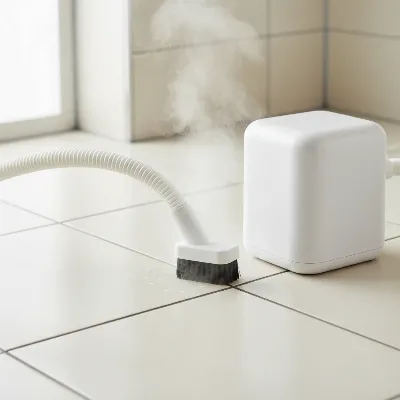 Dupray Neat Steam Cleaner, a compact white canister, cleaning tile grout with a brush attachment in a bright bathroom.
2. McCulloch MC1385 Deluxe Canister Steam Cleaner
The McCulloch MC1385 is often referred to as the “monster truck of steam cleaners” due to its heavy-duty construction and formidable cleaning power. It’s an excellent choice for extensive cleaning jobs and deeply embedded grout grime.
- Pros:
- Exceptional Power & Capacity: Features a massive 64-ounce water tank, providing up to two hours of continuous steam, perfect for large-scale grout cleaning projects.
- High-Pressure Steam: Delivers powerful steam (typically around 58 PSI for similar McCulloch models) that blasts through old tile grout and tough stains.
- Robust Grout Tools: Includes a variety of brushes, including metal and nylon scrubbers, and an angled nozzle, which are highly effective for aggressive grout cleaning.
- External Gauge: An external steam pressure gauge helps monitor and manage steam output effectively.
- Cons:
- Bulky and Heavy: At 13 lbs, it is heavier and bulkier than other models, making it less agile for very small spaces.
- Plastic attachments can become hot during extended use, requiring caution.
- Some reports of the steam trigger occasionally sticking.
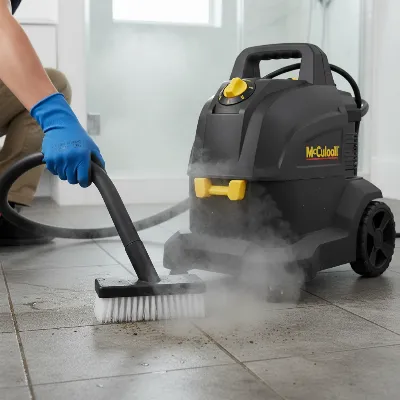 McCulloch MC1385 Deluxe Canister Steam Cleaner, a large black and yellow unit, cleaning stained floor grout with a utility brush.
3. Steamfast SF-370 Canister Steam Cleaner
The Steamfast SF-370 is a popular multi-purpose canister steam cleaner known for its effectiveness and value. It’s a solid choice for homeowners seeking a reliable unit to tackle various tasks, including regular grout maintenance.
- Pros:
- Good Steam Power for Value: Provides hot, pressurized steam over 200°F (93°C) and includes a jet nozzle that users praise for removing years of grime from grout.
- Decent Run Time: A 48-ounce water tank offers up to 45 minutes of continuous steam, suitable for most household cleaning sessions.
- Versatile Accessory Set: Comes with 15 accessories, including utility brushes and specific grout brushes, enabling comprehensive cleaning.
- Portability: Features wheels, a carrying handle, and a 6.5-foot hose for good maneuverability.
- Cons:
- Some users find the included plastic brushes less durable, prone to degrading quickly.
- May be more effective on surface grout dirt, with inconsistent results on very deep, old stains.
- No funnel included, which can make refilling slightly inconvenient.
4. Wagner Spraytech 905e Steam Cleaner
While often marketed for automotive detailing, the Wagner Spraytech 905e is a compact canister steam cleaner that proves surprisingly effective for household tasks, including grout and bathroom fixtures, thanks to its powerful steam and focused attachments.
- Pros:
- Focused Steam Power: The angled jet nozzle is excellent for blasting grime from tight spaces like grout lines, shower doors, and around faucets.
- Good Continuous Steam: Its 40-ounce tank provides up to 45 minutes of continuous steam, adequate for detailed cleaning jobs.
- Detail-Oriented Attachments: Comes with 11 attachment heads, including nylon and wire brushes, which are beneficial for tackling specific grout cleaning challenges.
- Affordable: Offers great value for its performance, making it an accessible option for thorough cleaning.
- Cons:
- Shorter power cord (6 feet) limits range, potentially requiring an extension cord.
- Attachments may be less durable and prone to breaking with heavy use.
- Requires a significant cool-down period before emptying the tank.
5. PurSteam Therma Pro 211 (2-in-1 Steam Mop & Handheld)
While primarily a steam mop, the PurSteam Therma Pro 211’s detachable handheld unit and dedicated grout tool make it an exceptional choice for targeted grout cleaning, offering the versatility of a canister in a more compact form.
- Pros:
- Rapid Heat-Up: Ready to use in just 30 seconds, making it ideal for quick clean-ups and spontaneous grout treatment.
- Dedicated Grout Tool: Users specifically praise its grout tool for deep cleaning tile grout, making it highly effective for this task.
- Versatile 2-in-1 Design: Easily transforms from a floor mop to a handheld steamer, offering flexibility for various cleaning needs beyond grout.
- Lightweight & Maneuverable: At just 4.4 pounds, it’s very easy to carry and navigate, even in intricate bathroom spaces.
- Cons:
- Smallest water tank (12.8 oz) results in a shorter run time (20-25 minutes), requiring more frequent refills for larger areas.
- Less overall steam power compared to heavy-duty canister models.
- Primarily designed as a mop, so the handheld mode might feel less robust than a dedicated canister.
Tips for Using and Maintaining Your Steam Cleaner
To get the best performance from your steam cleaner, especially for grout, and to ensure its longevity, follow these essential tips:
Usage Tips:
- Preparation is Key: Before steam cleaning grout, vacuum or sweep the area to remove loose dirt and debris. This prevents the steam from pushing particles further into the grout lines.
- Test in an Inconspicuous Area: Always test the steam cleaner and any attachments on a small, hidden section of your tile and grout first to ensure it doesn’t cause damage or discoloration, especially with colored grout or delicate tiles.
- Use the Right Attachment: For grout, always opt for the smallest, stiffest brush attachment (nylon is generally safe, brass for very tough spots with caution). Use a jet nozzle to blast steam directly into the lines to loosen grime.
- Work in Small Sections: Tackle grout in manageable sections to prevent loosened dirt from drying back onto the surface.
- Scrub and Wipe: After steaming a section, use the grout brush to gently scrub away the loosened dirt. Immediately wipe away the dirty water and grime with a clean microfiber cloth or towel. Don’t let the dirty water dry.
- Move Slowly: Allow the steam ample time to penetrate and break down the grime. Move the nozzle or brush slowly along the grout lines.
- Ventilate: Ensure good ventilation in the area you are cleaning to help moisture dissipate and prevent mold growth.
- Safety First: Always follow the manufacturer’s safety instructions. Wear appropriate protective gear, like gloves, and be cautious of hot steam and surfaces. Never open the water tank when the unit is hot and pressurized.
Maintenance Tips:
- Use Distilled Water: While many steam cleaners can use tap water, distilled water is highly recommended. It prevents mineral buildup (limescale) in the boiler, which can reduce efficiency and shorten the machine’s lifespan.
- Empty After Each Use: Always empty the water tank after each cleaning session and allow the unit to cool completely. Storing water in the tank can lead to mineral buildup and potential bacterial growth.
- Descale Regularly: If you use tap water, descale your steam cleaner periodically (e.g., every 1-3 months, depending on water hardness and usage) using a white vinegar solution or a manufacturer-recommended descaling product. Follow the specific instructions in your manual.
- Clean Attachments: Wash and dry all brushes, nozzles, and microfiber pads after each use. Replace worn-out brushes as needed, as their effectiveness diminishes with fraying bristles.
- Store Properly: Store the steam cleaner in a clean, dry place. Ensure the cord is neatly wrapped and accessories are organized to prevent loss or damage.
Common Issues and Troubleshooting:
- No Steam/Low Steam: Check water level, ensure the unit is heated to operating temperature, and descale if mineral buildup is suspected.
- Water Dripping: This can occur if the steam isn’t fully heated or if the hose or attachments are held at an incorrect angle. Allow the unit to fully heat up and keep attachments level.
- Attachments Breaking: Over-aggressive scrubbing or using the wrong brush for the surface can cause damage. Replace worn brushes promptly.
Conclusion
A high-quality canister steam cleaner is an indispensable tool for achieving a truly deep clean, especially when it comes to rejuvenating stubborn grout lines. By harnessing the power of superheated steam, these machines effectively dissolve grime and sanitize surfaces without relying on harsh chemicals, making your home a healthier and more sparkling environment. Whether you opt for the robust power of the McCulloch MC1385, the versatile efficiency of the Dupray Neat, or the targeted precision of the PurSteam Therma Pro 211, investing in the right steam cleaner means saying goodbye to dingy grout and hello to a cleaner, fresher home.
Which of these steam-powered marvels will be the next addition to your cleaning arsenal, ready to tackle those challenging grout lines?
Frequently Asked Questions
Can steam cleaners damage grout?
Generally, no. Steam cleaners use only water, which is safe for most sealed tile and grout. However, extremely high pressure or concentrated heat on unsealed, aged, or poorly installed grout can potentially cause minor damage or loosen it. Always test in an inconspicuous area and avoid over-saturating the surface.
How often should I steam clean my grout?
For heavily trafficked areas or kitchens, cleaning grout monthly can prevent significant buildup. For bathrooms and other areas, quarterly or bi-annually might suffice. Regular light cleaning is easier than tackling years of accumulated grime.
Can I add cleaning solution to my steam cleaner’s water tank?
No, it is strongly advised not to add cleaning solutions, detergents, or chemicals directly to the water tank of a traditional steam cleaner. This can damage internal components, void your warranty, and create hazardous fumes. Steam cleaners are designed to work with water alone.
What’s the best way to clean very dark, embedded grout stains?
For very dark and deeply embedded stains, a combination of high-pressure steam from a canister unit, a stiff nylon (or cautious use of a brass) grout brush, and potentially a pre-treatment with a specialized oxygen-based grout cleaner (applied before steaming, and thoroughly rinsed) can be most effective. Follow up by wiping away loosened dirt immediately.
What kind of water should I use in my steam cleaner?
Most manufacturers recommend using distilled water. This prevents the buildup of mineral deposits (limescale) in the boiler, which can extend the lifespan of your machine and ensure optimal steam production. If you use tap water, regular descaling will be necessary.
